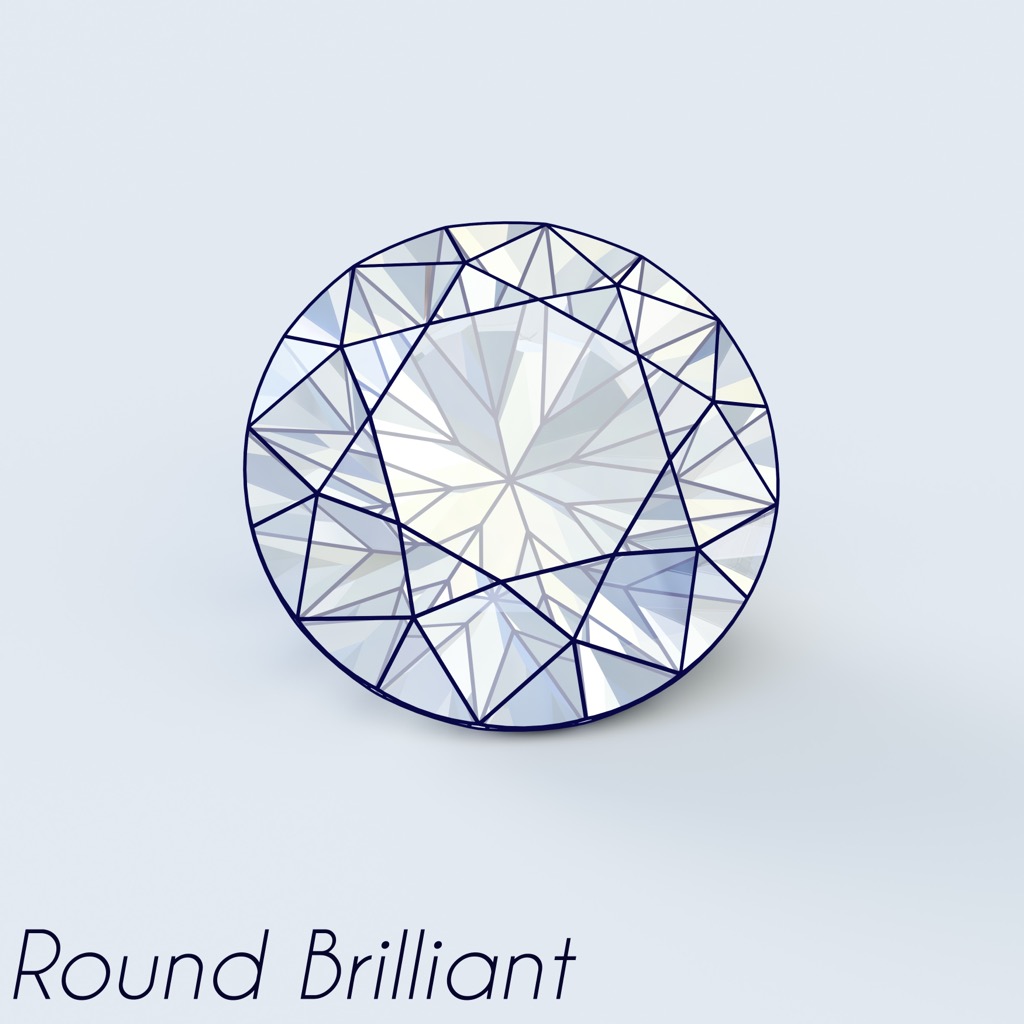
Full Cut
57–58 facets · Brilliant
The reference point for all diamond cutting: a round outline carrying exactly 57 or 58 precisely angled facets arranged to return the maximum possible brilliance and fire. Rounds with fewer facets do not qualify; the full facet count is what makes a true round brilliant.
Best as: the centre stone. The world’s most requested engagement cut.
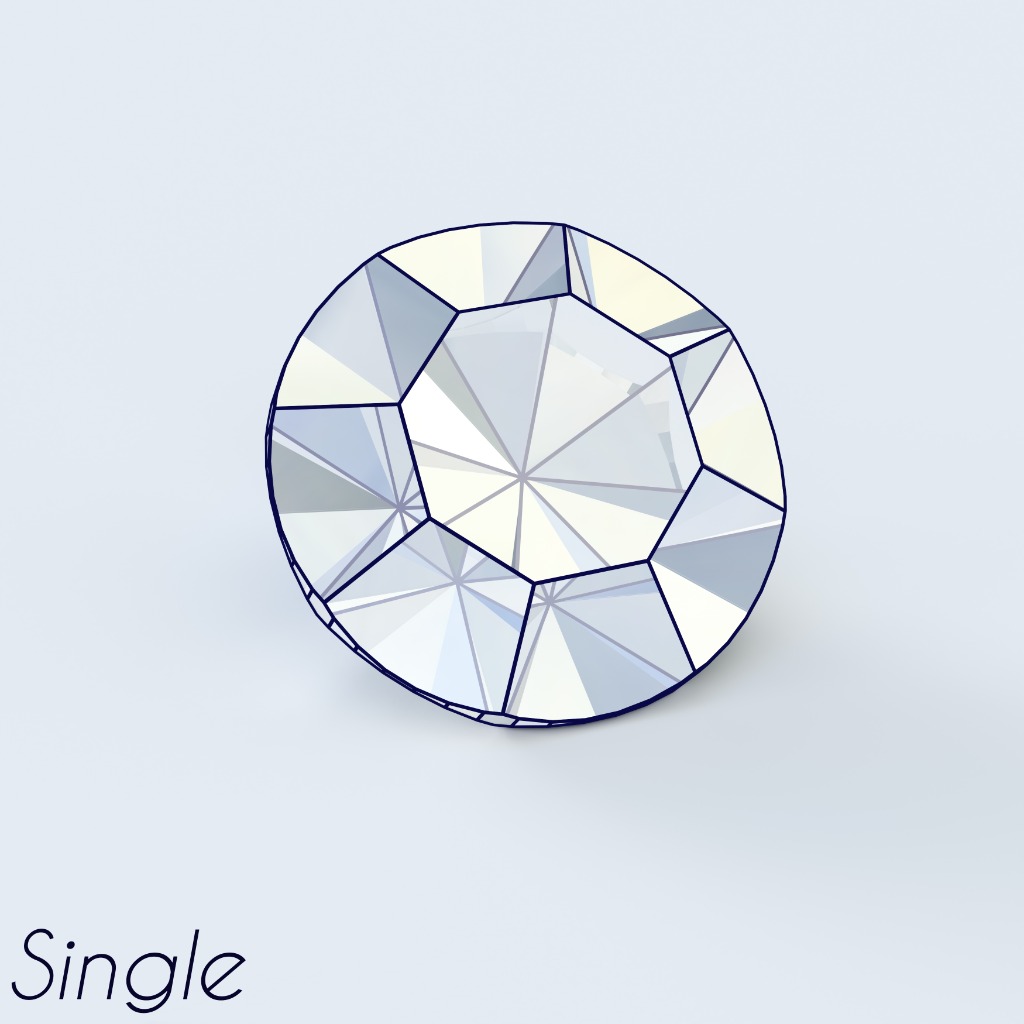
Single Cut
16–18 facets · Brilliant
The round brilliant’s quieter sibling: the same circular outline but only 16 to 18 broad, open facets. Often the first stage of a rough diamond’s journey, it reflects light in soft, wide flashes rather than intense sparkle. Known in the trade as melee.
Best as: accent stones surrounding a larger centre. Pavé, halos, watch dials.
Princess
Square · Brilliant
A crisp square or slightly rectangular outline over an inverted-pyramid body with four beveled sides. One of the most efficient cuts made, losing only 10 to 20% of the rough, which preserves value while delivering sharp, contemporary brilliance and clean corners.
Best as: a modern centre stone; also stunning as matched pairs.
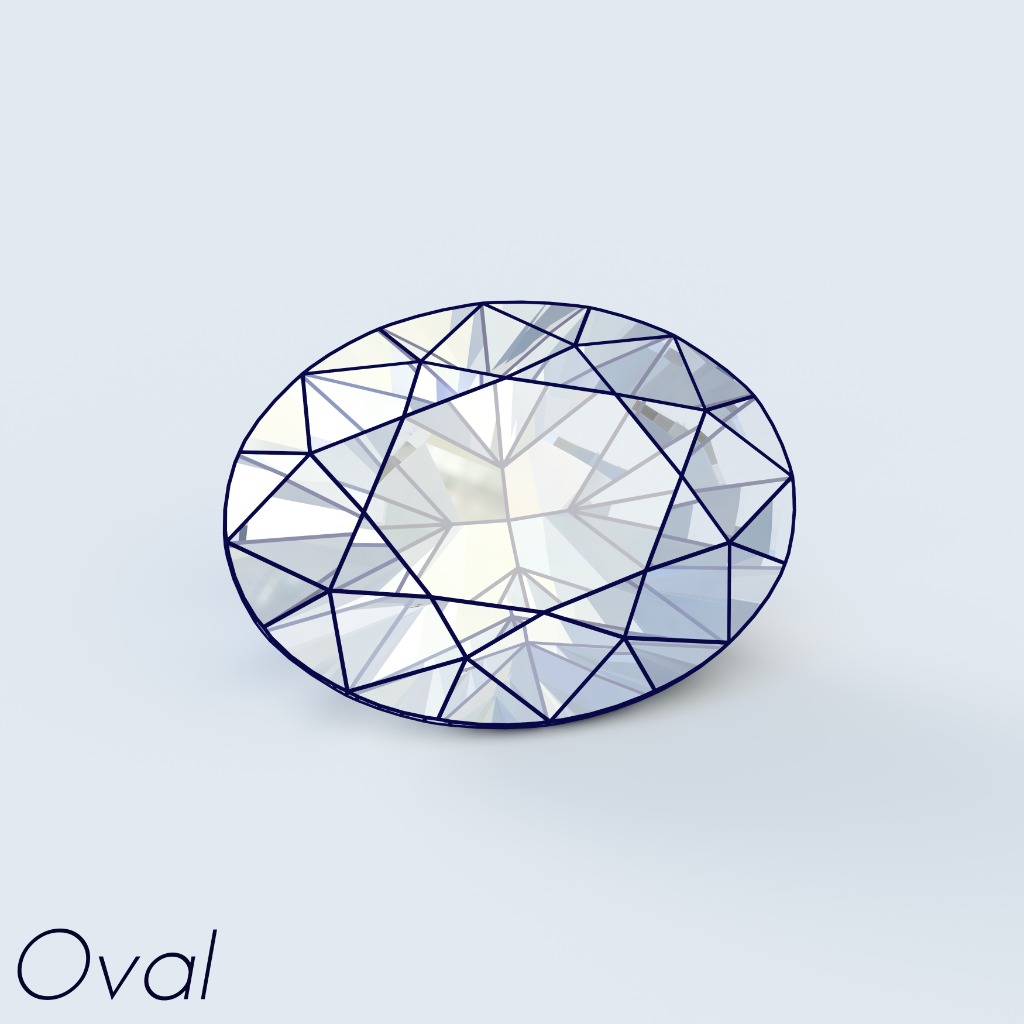
Oval
Elongated brilliant
An elongated take on the round brilliant that keeps its sparkle while adding graceful length. With no sharp corners it resists chipping, and its stretched outline flatters the hand. A symbol of continuity that suits vintage and modern settings alike, especially bezels.
Best as: a centre stone with the illusion of greater size and slimmer fingers.
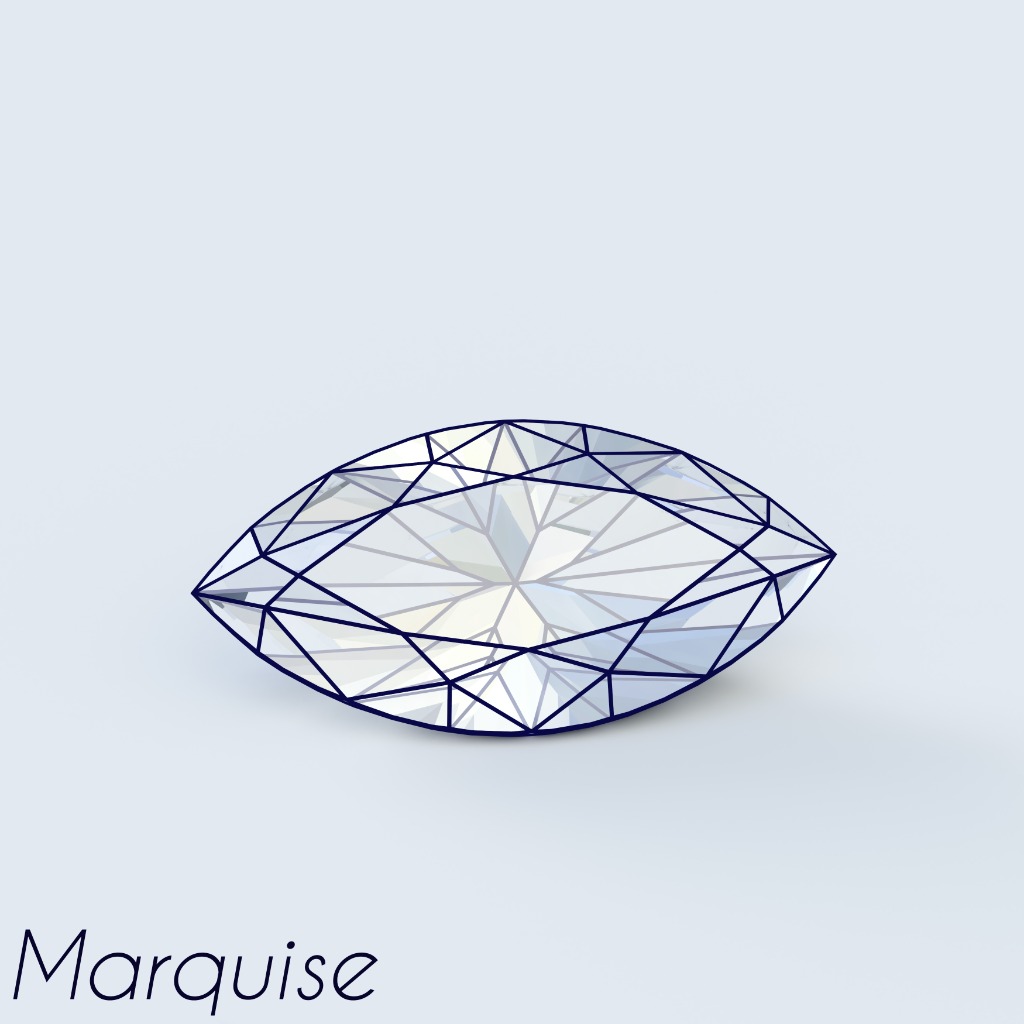
Marquise
50+ facets · 18th-c. France
A dramatic boat-shaped silhouette, wide at the centre and tapering to two sharp points, born in 18th-century France and often said to resemble a smile. More than 50 facets deliver lively brilliance while the elongated body visually lengthens the finger.
Best as: a statement centre for wearers who want individuality over convention.
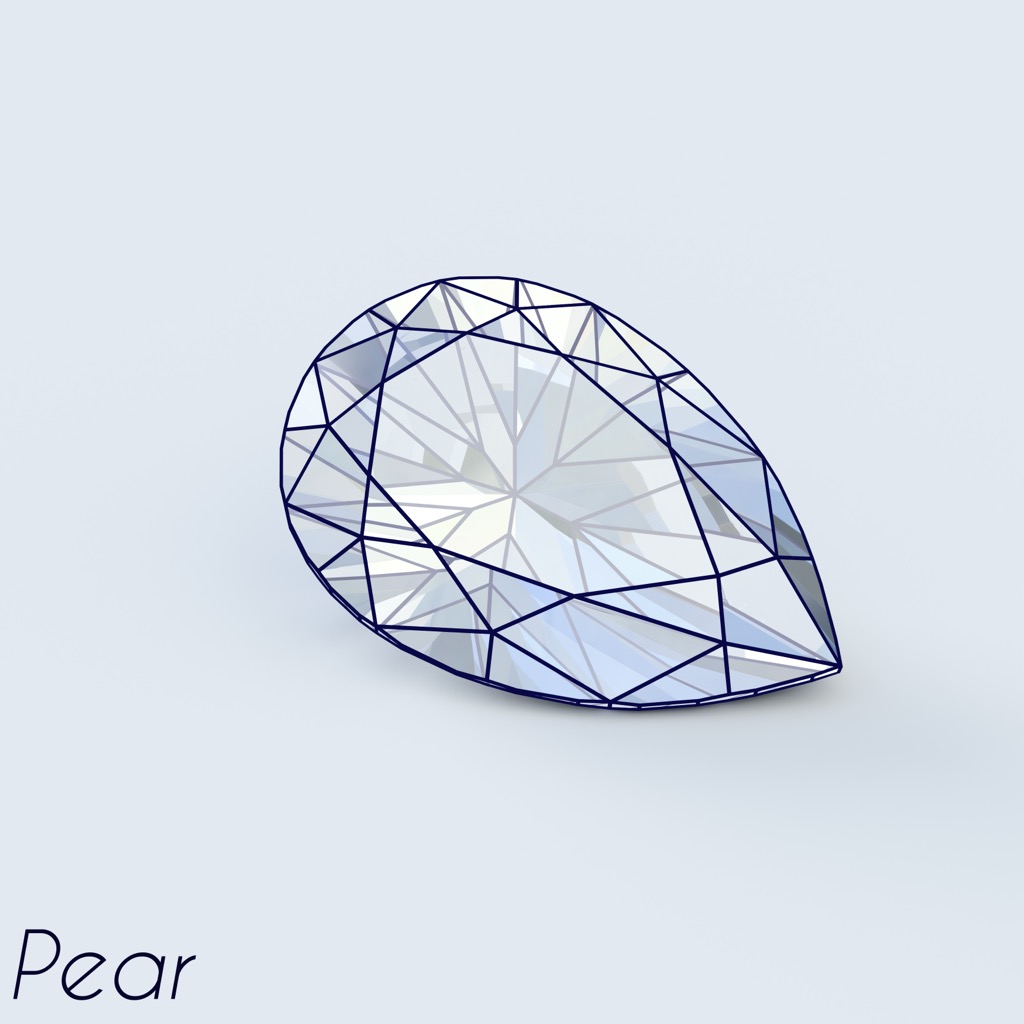
Pear
58 facets · 15th-c. Europe
A fusion of round brilliant and marquise: rounded at one end, tapering to a delicate point at the other, like a falling raindrop. Typically 58 facets with classic length-to-width ratios of 1.50 to 1.70, it wears larger than its carat weight suggests.
Best as: a romantic centre stone or drop earrings; a prong protects the point.
Cushion
58–64 facets · Old mine heritage
A pillow-soft square with rounded corners, descended from the historic old mine cut. Traditional versions carry 58 facets; modern cushions reach 64 for a livelier play of light. Available square or elongated. Vintage character, contemporary sparkle.
Best as: a romantic centre stone in halo or vintage-inspired settings.
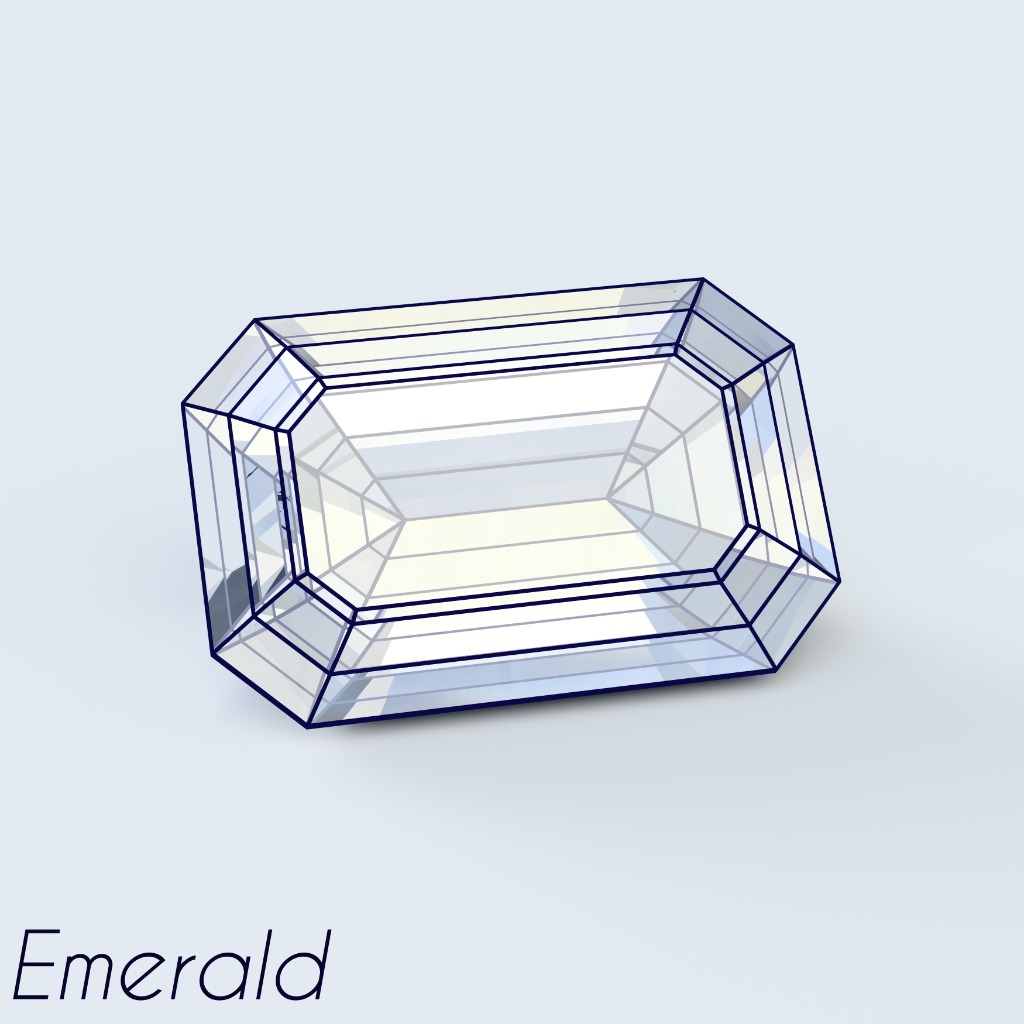
Emerald
Step cut · 1920s
The definitive step cut: long linear facets arranged like stairs down an elongated rectangle with cropped corners. Rising to fame in the 1920s, it trades fire for a deep, mirror-like play of light, the hall of mirrors, that rewards high clarity.
Best as: a poised, architectural centre stone for those who prefer clarity over sparkle.
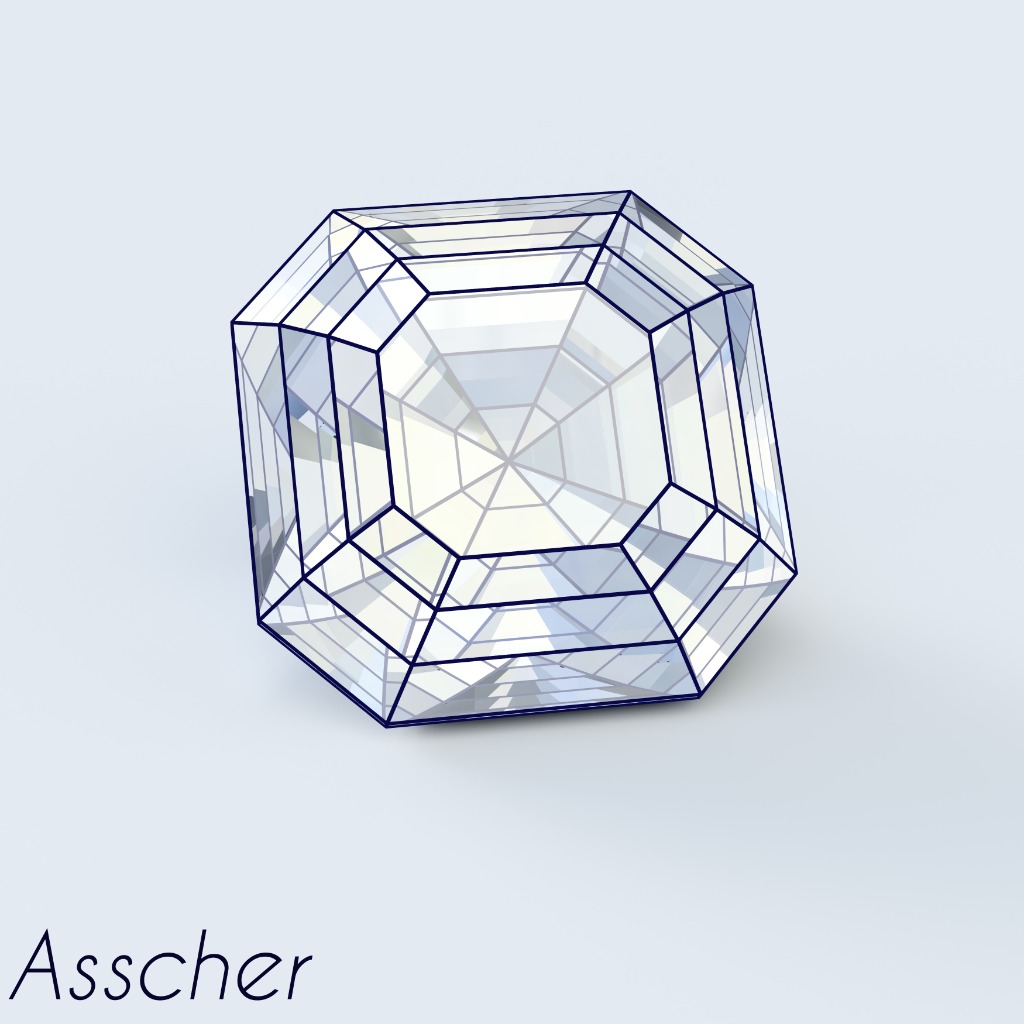
Asscher
Step cut · Art Deco
A square step cut introduced in the early 20th century and beloved of the Art Deco era. Its meticulously layered facets draw the eye inward to a distinctive windmill pattern radiating from the corners toward the culet. Structured, deep, magnetic.
Best as: a heritage-feel centre stone bridging vintage and modern design.
Radiant
~70 facets · Mixed · 1970s
Developed in the 1970s to give rectangular diamonds the fire of a round: an emerald-cut outline with trimmed corners carrying around 70 brilliant-style facets from crown to pavilion. Its intense scintillation makes it a favourite for coloured diamonds.
Best as: a bold contemporary centre stone; superb for fancy colours.
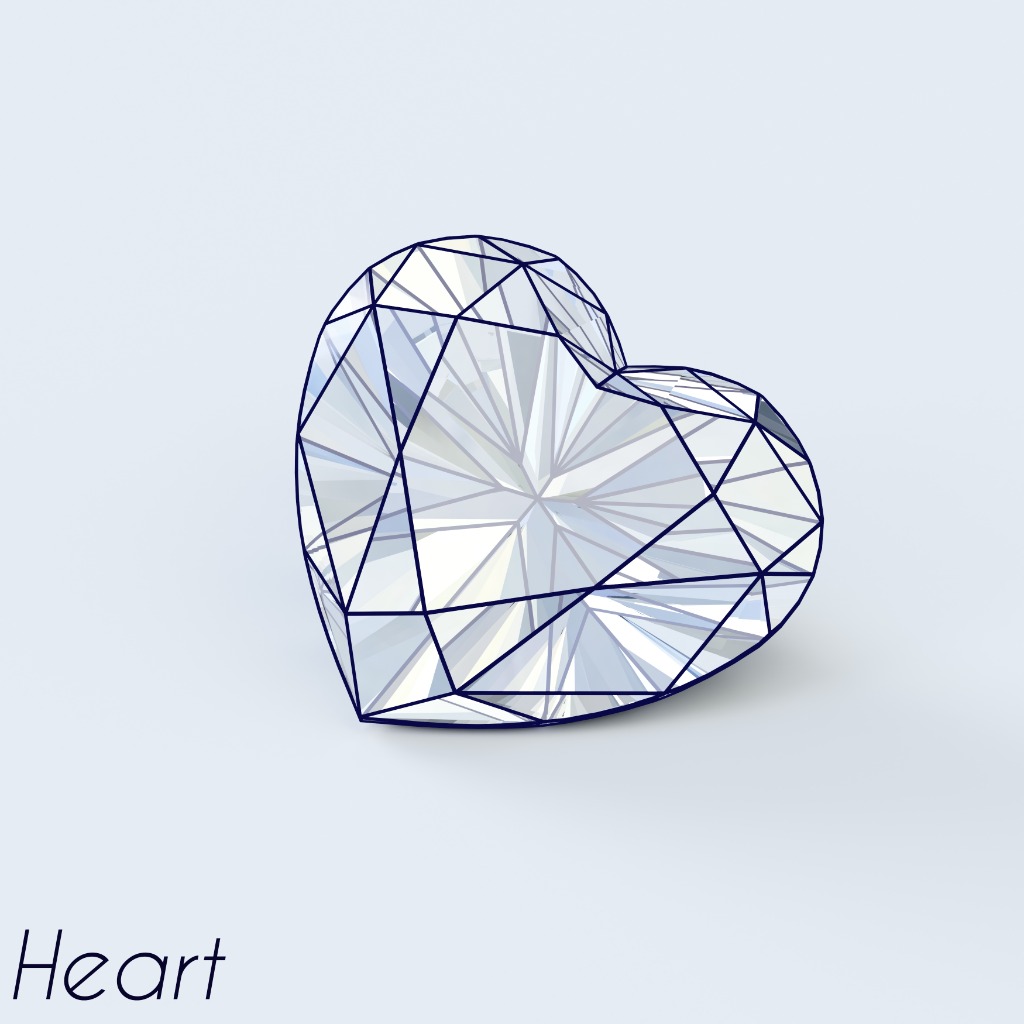
Heart
~56 facets · Brilliant
The most literal symbol in diamond cutting, refined over centuries. Around 56 facets balance brilliance against the sculpted outline; beauty lives in the symmetry. Mirrored lobes, a crisp cleft, gently rounded wings and a precise point.
Best as: a sentimental centre for pendants, earrings and milestone gifts.
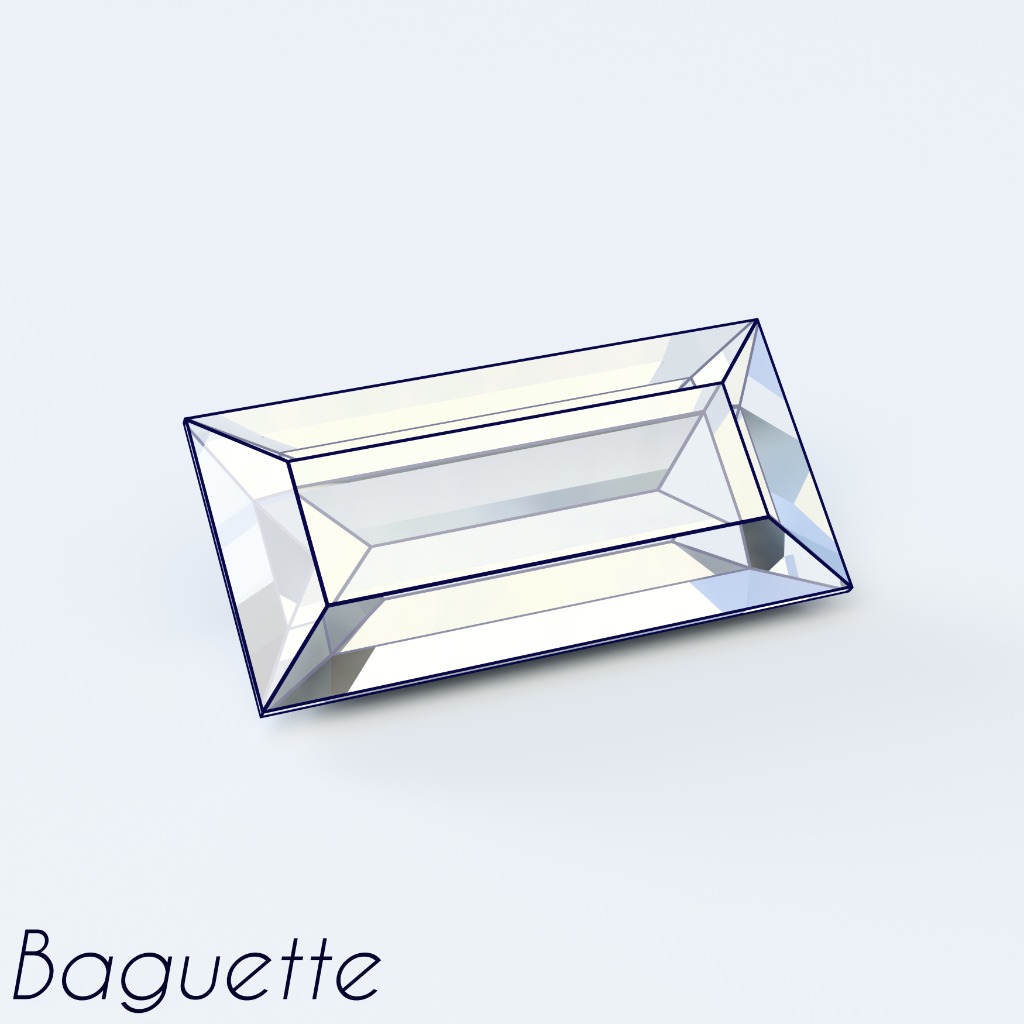
Straight Baguette
Step cut · Art Deco
Long, slim and rectangular with straight unbevelled edges and just a few rows of step facets. Crisp, glass-like shine rather than sparkle. A 1920s Art Deco signature, prized for creating rhythm and clean lines within a design.
Best as: side stones, channel settings, and continuous lines in bracelets and rings.
Taper
Step cut · Baguette family
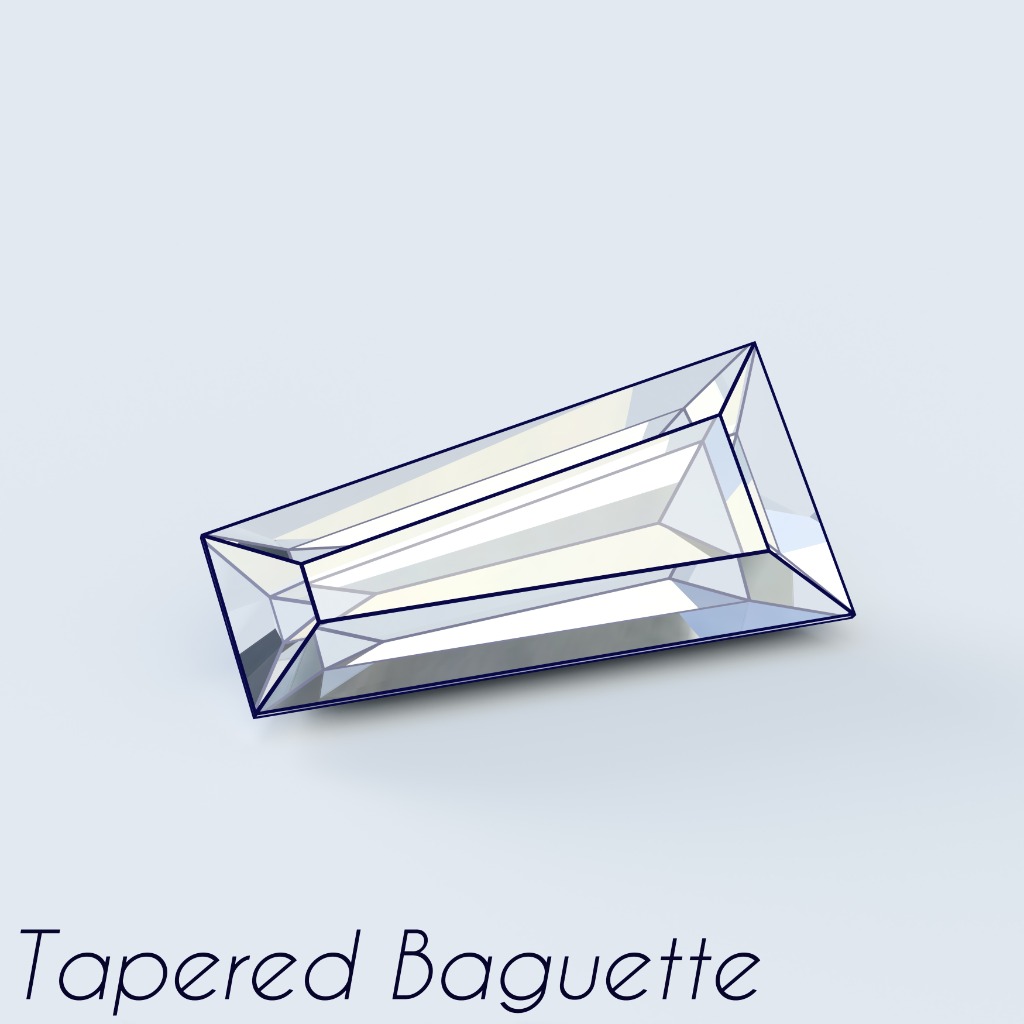
A baguette that narrows along its length into an elegant elongated trapezoid, originally devised to make the most of unevenly edged rough. Understated and clean, it guides the eye toward whatever it flanks.
Best as: accents beside rounds, princesses and ovals; grouped into fans and curves.
Trapezoid
Brilliant & step versions
Parallel top and bottom edges with sides tapering inward. The brilliant version adds sharp sparkle beside radiant and princess centres; the step version offers calm, mirror-like reflections beside emerald and Asscher cuts. With no universal ideal ratio, each stone is proportioned by eye and experience.
Best as: matched side stones that frame and strengthen the centre.
Tapered Bullet
Step cut · Matched pairs
Straight and structured at the top, narrowing to a sharp V at the base. A silhouette reminiscent of a polished bullet. Rare and expressive, its clean lines channel light with purpose, adding direction and intensity without overpowering.
Best as: statement side stones beside rounds, cushions, radiants, emeralds and Asschers.
Radiant Square
~70 facets · Mixed · 1970s
The radiant’s equal-sided form: a square outline with clipped corners and nearly 70 facets stretching crown to pavilion. It proved strong lines and intense fire can coexist. Bold without losing elegance, and especially flattering to coloured diamonds.
Best as: a commanding centrepiece or arranged as matching stones.
Rectangular Radiant
62–70 facets · Mixed
Bold yet romantic. Crisp corners and an elongated, regal profile carrying 62 to 70 facets. Buyers often choose it over step-cut styles for its superior sparkle in an oblong form; the faceting also intensifies colour in fancy stones.
Best as: a centre stone or perfectly matched pairs in rings, earrings and high jewellery.
Half Moon
D-shaped · Step & brilliant
A semi-circle with one straight edge and one sweeping arc, historically fashioned from broken rounds and ovals, which demanded expert symmetry and colour matching. The step version gives calm, glass-like flashes; the brilliant version acts like beams of light beside a centre stone.
Best as: matched side stones in three-stone and solitaire-embracing designs.
Epaulette
Crescent · Matched pairs
A sculptural crescent whose inward-facing curve appears to embrace the stone beside it. Grand yet controlled, it guides the eye toward the focal diamond rather than competing with it. Theatre in service of the centre.
Best as: matched pairs framing curved centres: oval, cushion, marquise.
Trilliant
~50 facets · 1960s
Three equal sides and an expansive table. A 1960s innovation associated with individuality and confidence. As a solitaire it carries around 50 facets, often with gently curved sides to enhance perceived size; as accents it appears sharper and more architectural.
Best as: either role. An energetic centre or crisp matched pairs in three-stone rings.
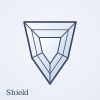
Shield
Broad top, tapered sides
Inspired by a warrior’s shield: a wide upper edge tapering gracefully to a point, carrying timeless associations of protection and strength. Set in rings with the broad edge inward, the tapered ends flow naturally along the band.
Best as: matched side stones; also striking in pendants and drop earrings.
Kite
Graphic · Step styling
A sharp, graphic quadrilateral tapering to points top and bottom, like a kite in flight. Its elongated body guides the eye along the shank and lengthens the hand; grouped kites can form radiant, star-like compositions.
Best as: a daring centrepiece or matched sides in contemporary high jewellery.
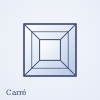
Carré
Square step · Art Deco
A study in restraint: square outline, step facets, sharp uncut corners. The princess’s quiet, glass-like cousin. Born partly of rough-preserving practicality, it found its aesthetic home in the Art Deco era. Open facets make clarity paramount.
Best as: understated centres and seamless rows for jewellery that whispers.
Hexagon
Six-sided · Step & brilliant
Six sides of confident geometry, popularised in the 1920s. The step version delivers the inward-drawing hall of mirrors of its emerald and Asscher kin; the brilliant version scatters vivid fire across the same architectural outline. No fixed ratio governs it. A shape for individualists.
Best as: an angular centrepiece or powerful framing pairs in geometric designs.
Pie Cuts
4–9 assembled segments
Multiple smaller diamonds cut and aligned so precisely that they read as one large stone: typically nine segments for the emerald and round forms, four for the pear and oval, five for the star. When proportion, colour and light performance match perfectly, the joins disappear. Solitaire impact with far greater design flexibility.
Best as: a design-forward, cost-effective alternative to a large single centre stone.